
Job Overview
Location: Warsaw, Ontario
Structure: Two-story detached house
Problem: Squirrel activity in the roof and attic
Service: Humane squirrel removal and wildlife exclusion
Visits: 2
Summary
We responded to reports of squirrel activity in the attic of a two-story home in Warsaw. During the inspection, Andrew confirmed squirrel activity and identified additional evidence of bat access through separate structural gaps. Humane removal measures were implemented by installing one-way doors at the active squirrel entry points, followed by comprehensive exclusion work to secure multiple vulnerable areas of the exterior. A follow-up visit confirmed that wildlife activity had ceased, the one-way doors were removed, and the entry points were permanently sealed.
Background / Property Context
The property is a two-story detached home with an aging roofline, exposed fascia, brick exterior, and decorative trim. Weathering and natural building movement had created several openings around the eaves, drip edge, brickwork, and trim that could allow wildlife to enter concealed attic spaces.
Customer Concern
The homeowner reported hearing squirrel activity in the roof. A complete inspection was requested to identify the source of the activity and prevent wildlife from re-entering the attic.
Inspection & Findings
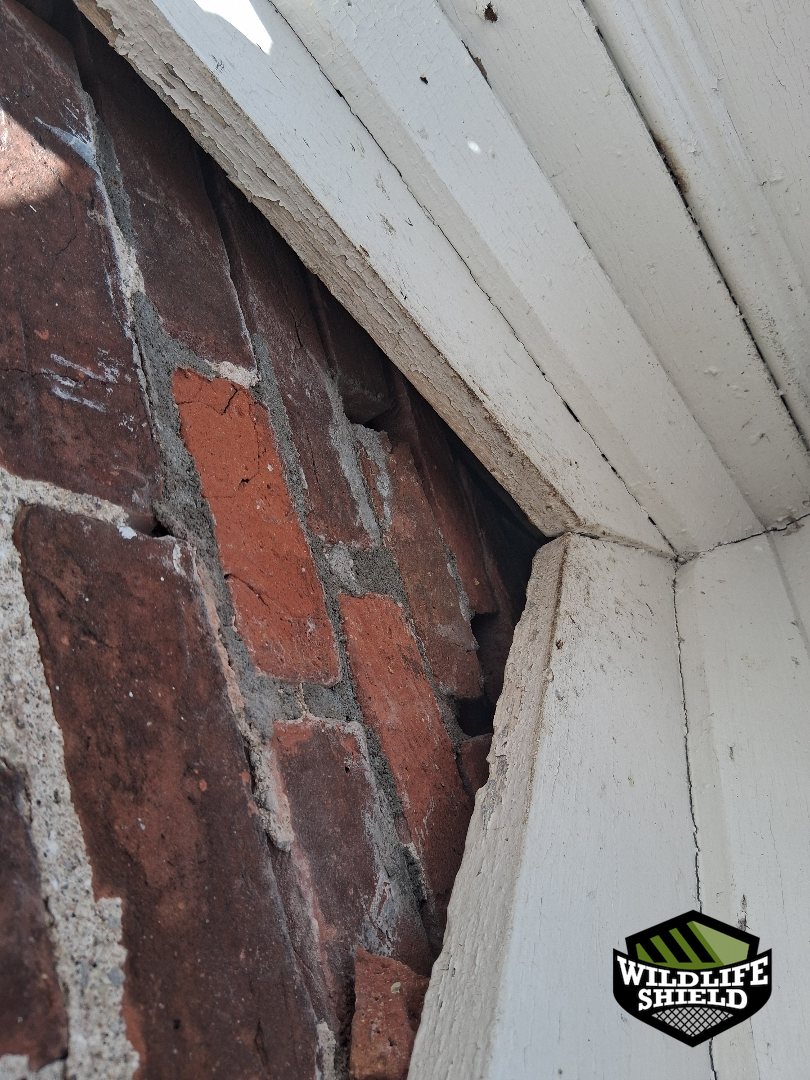
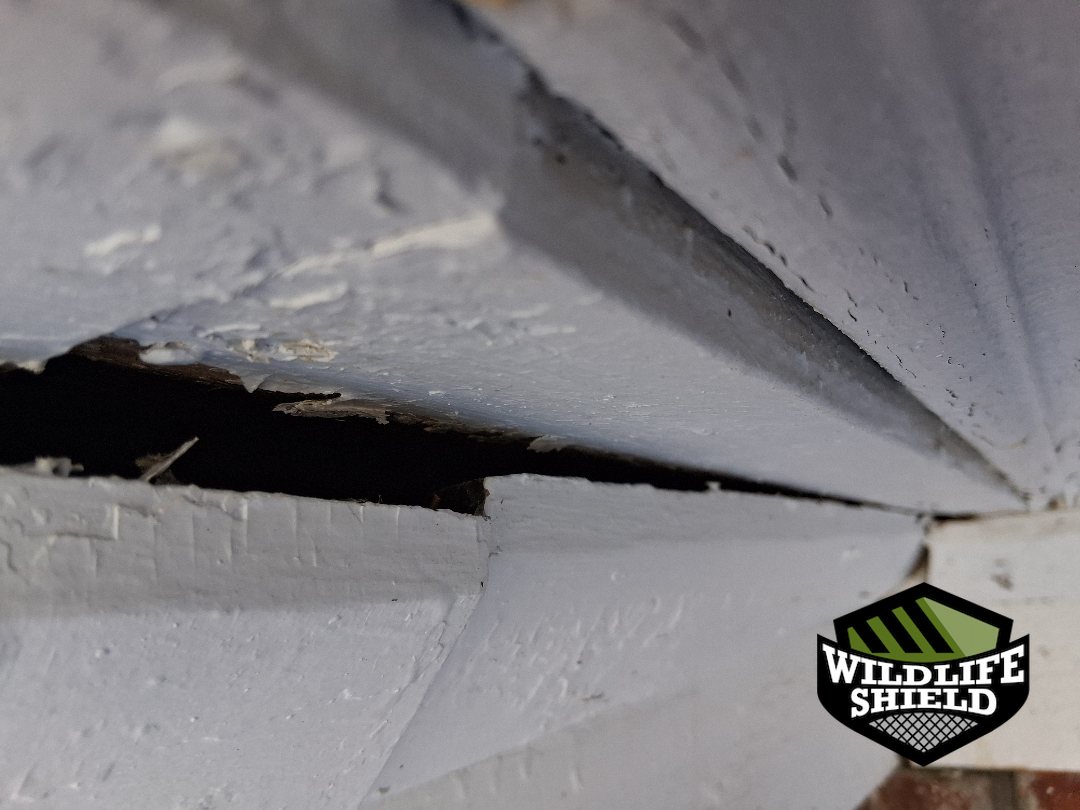
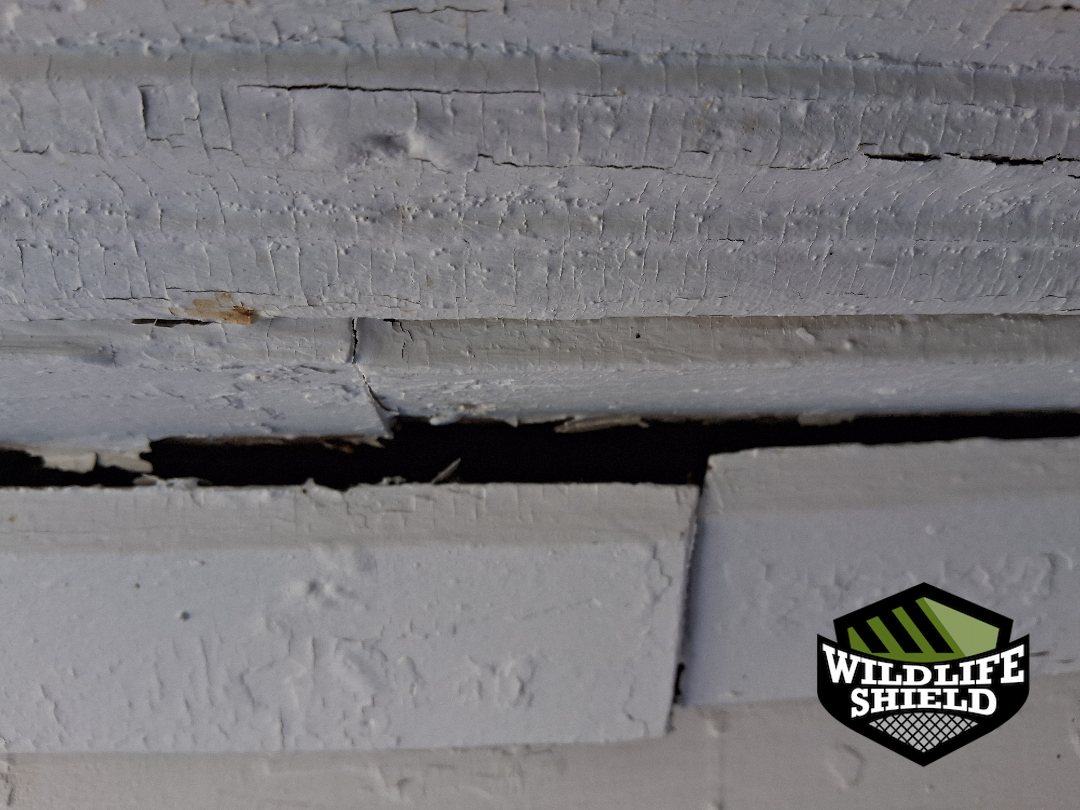
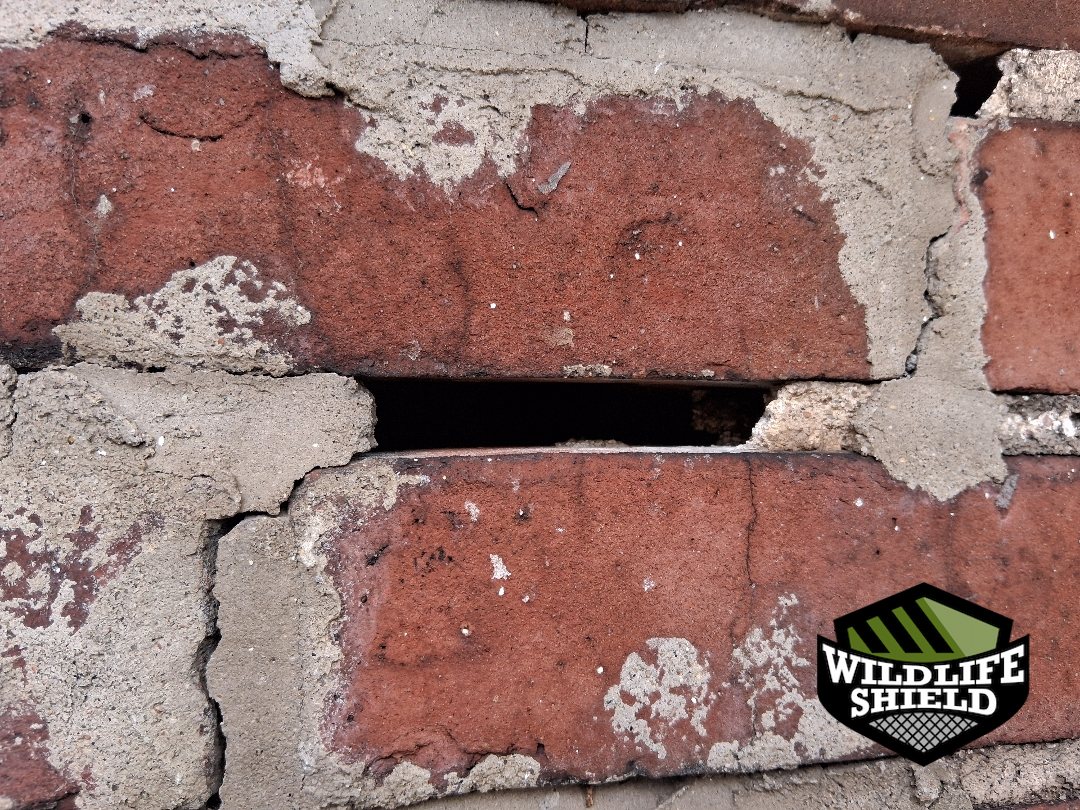
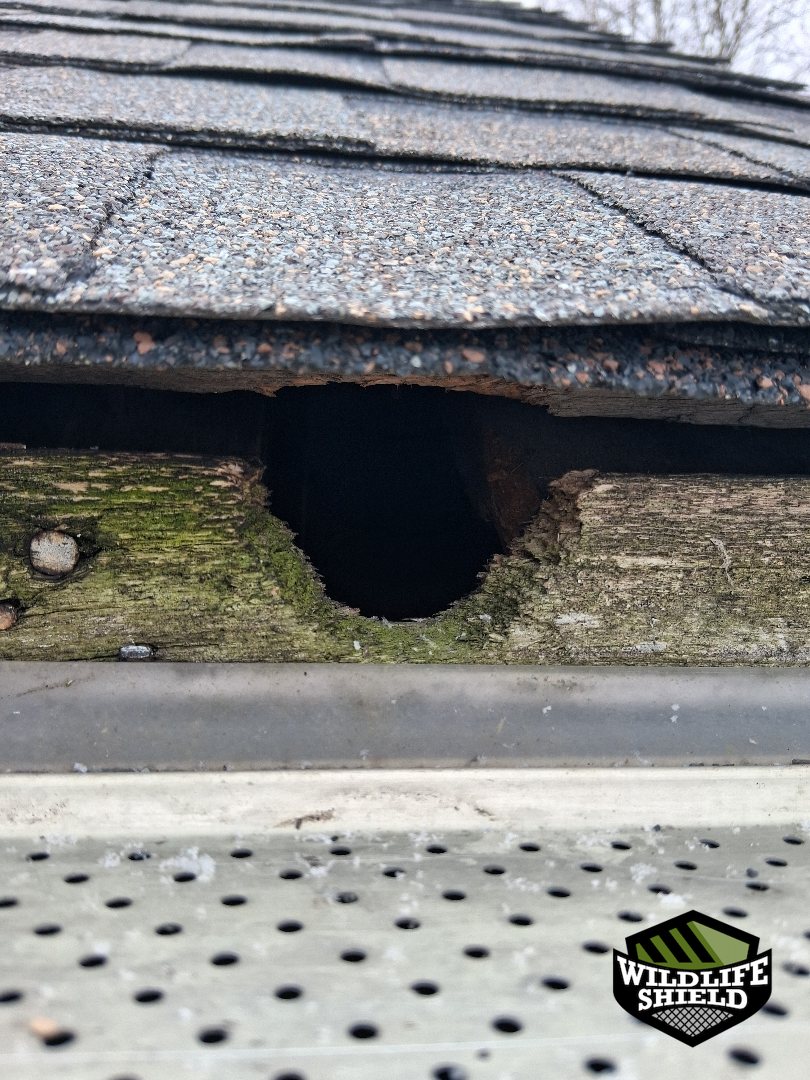
Andrew inspected the roofline and exterior and confirmed active squirrel entry through openings along the eaves. Additional gaps were observed around sections of brickwork and trim that could also provide wildlife access. Evidence observed during the inspection indicated separate bat access through small structural gaps, requiring those openings to be addressed as part of the exclusion work.
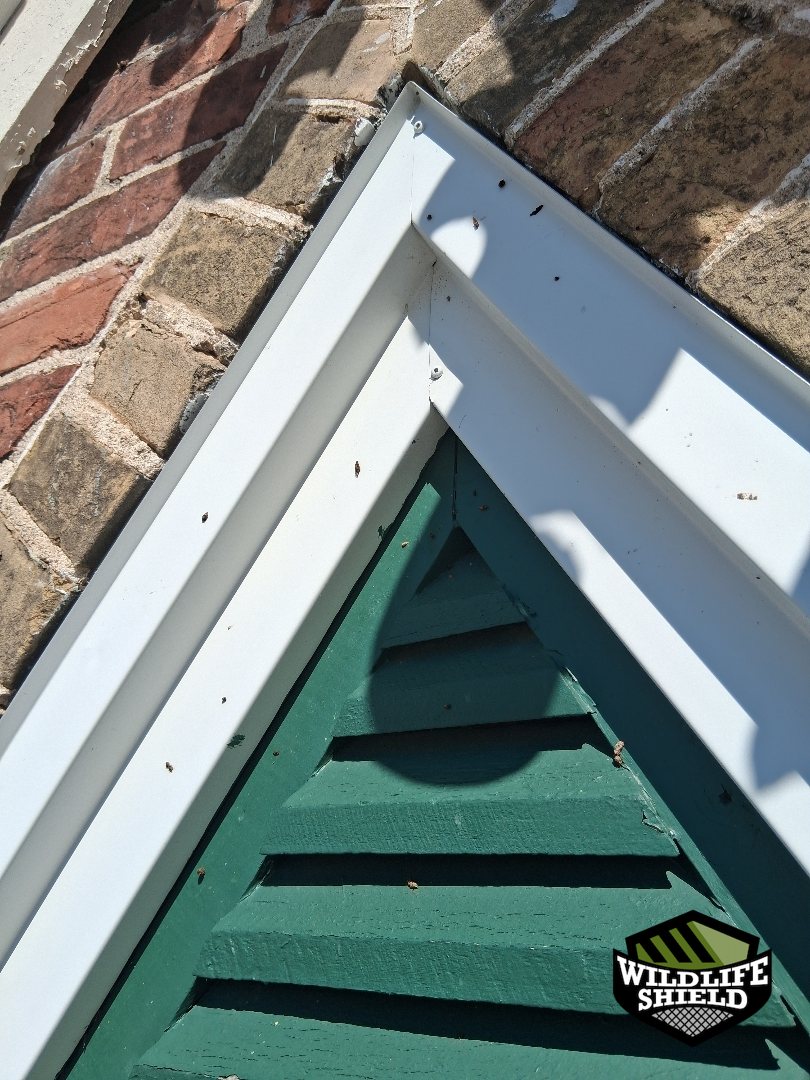
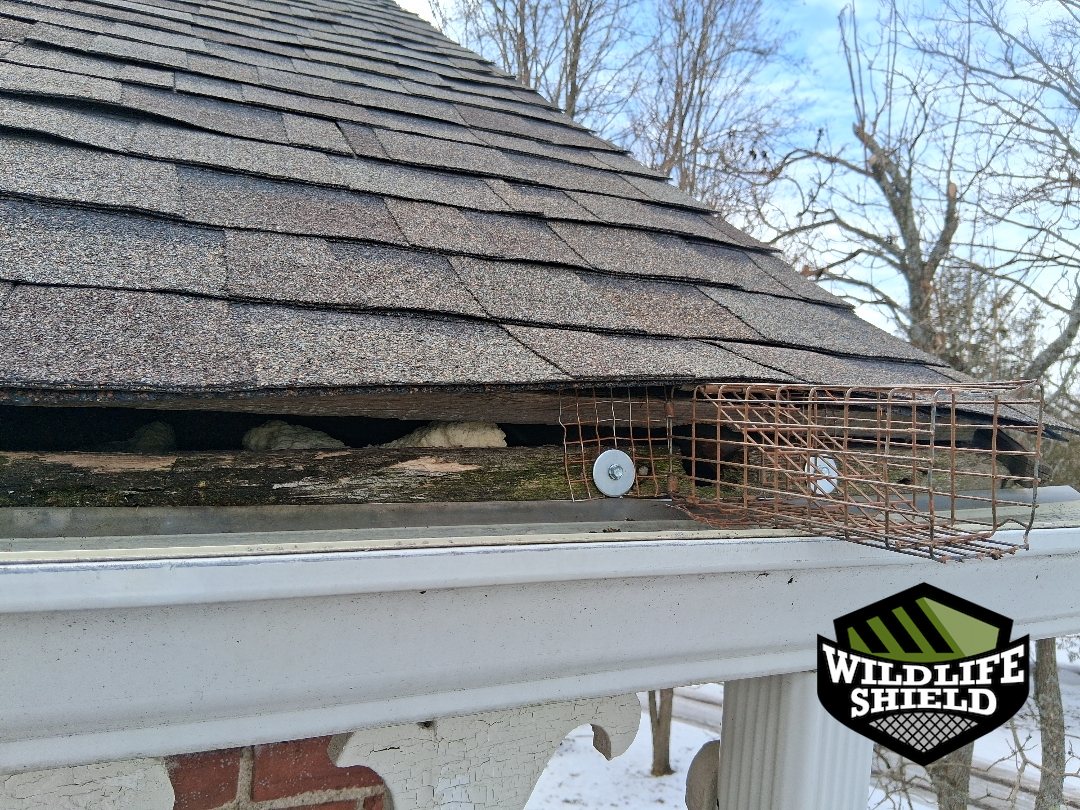
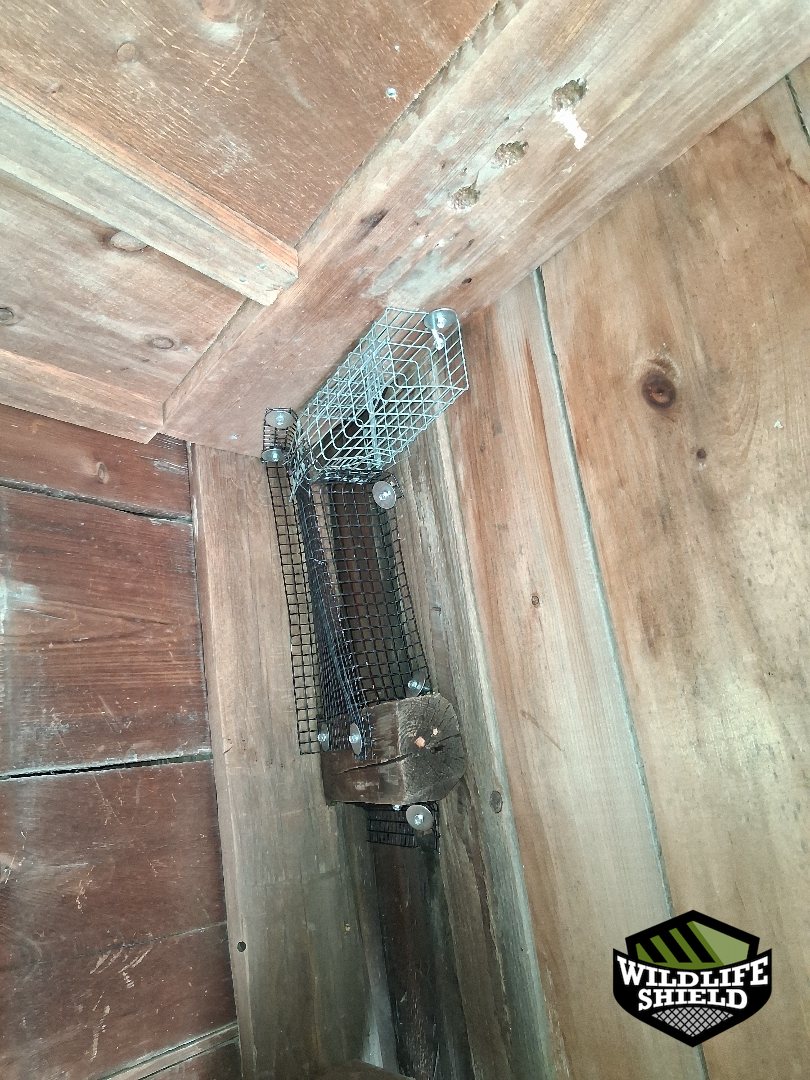
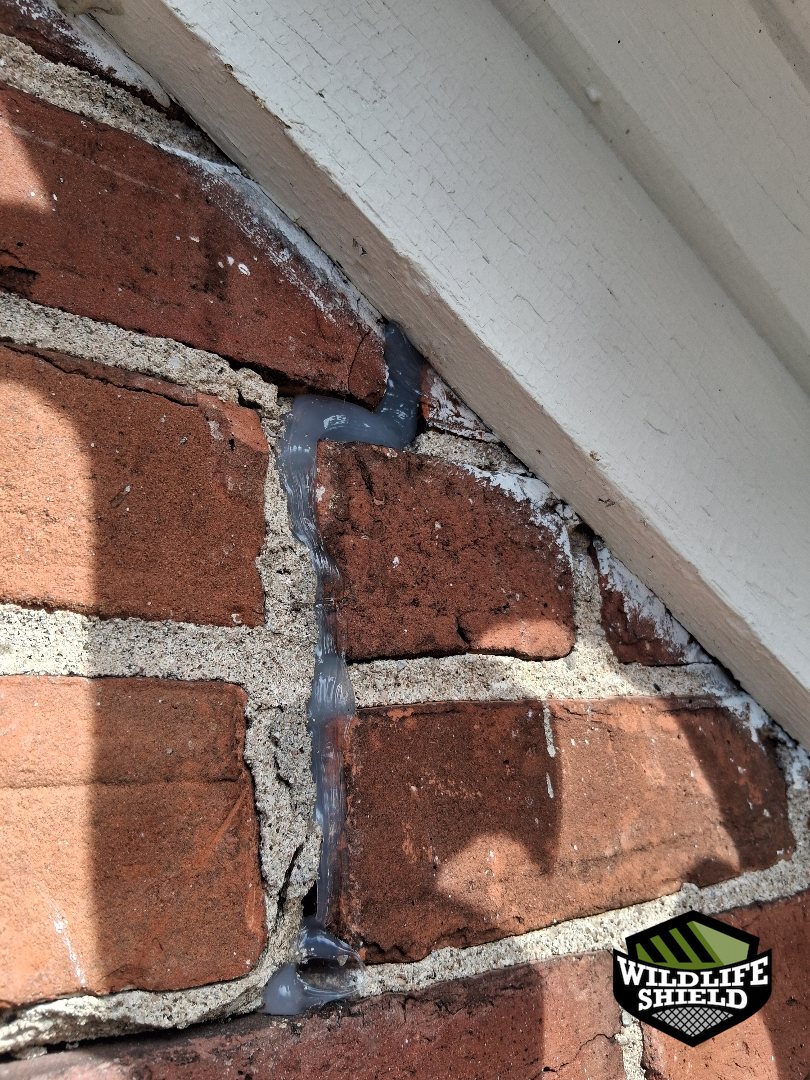
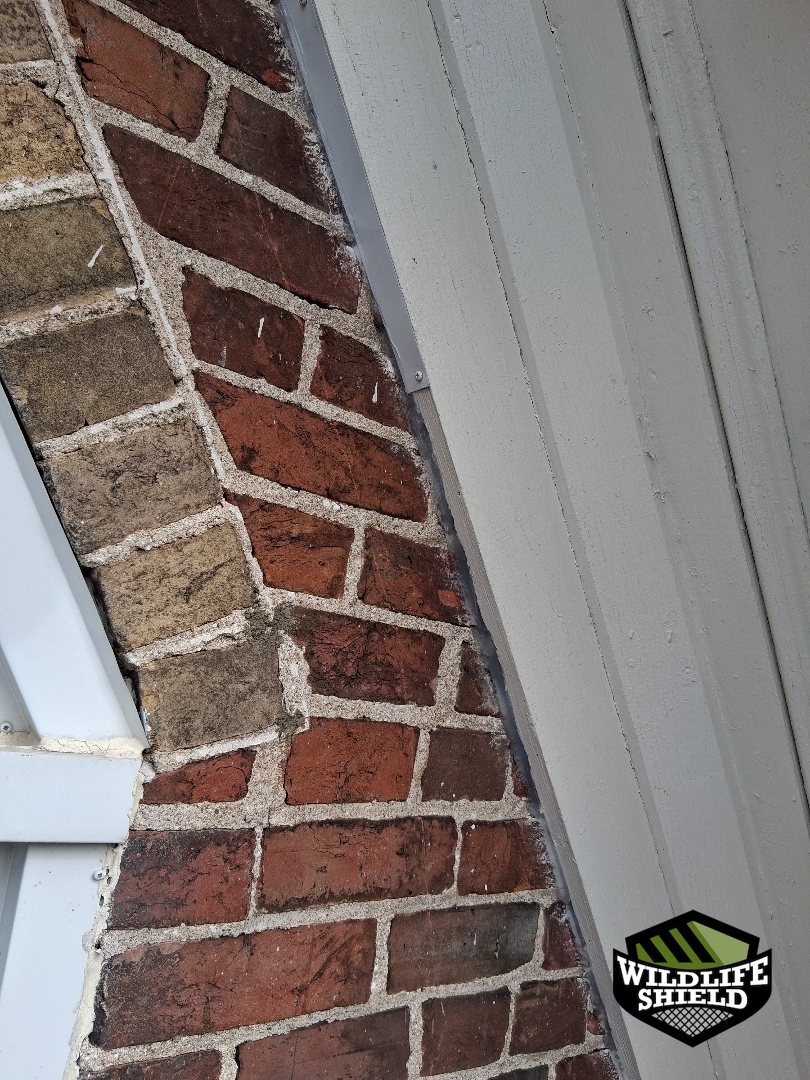
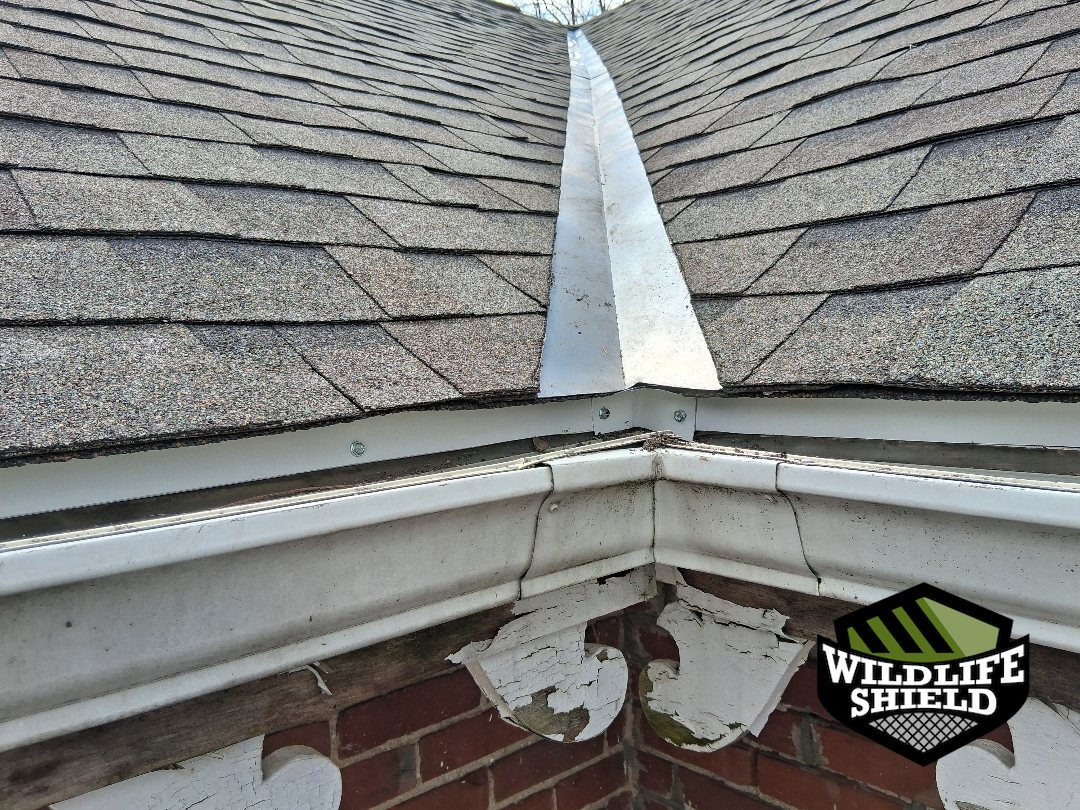
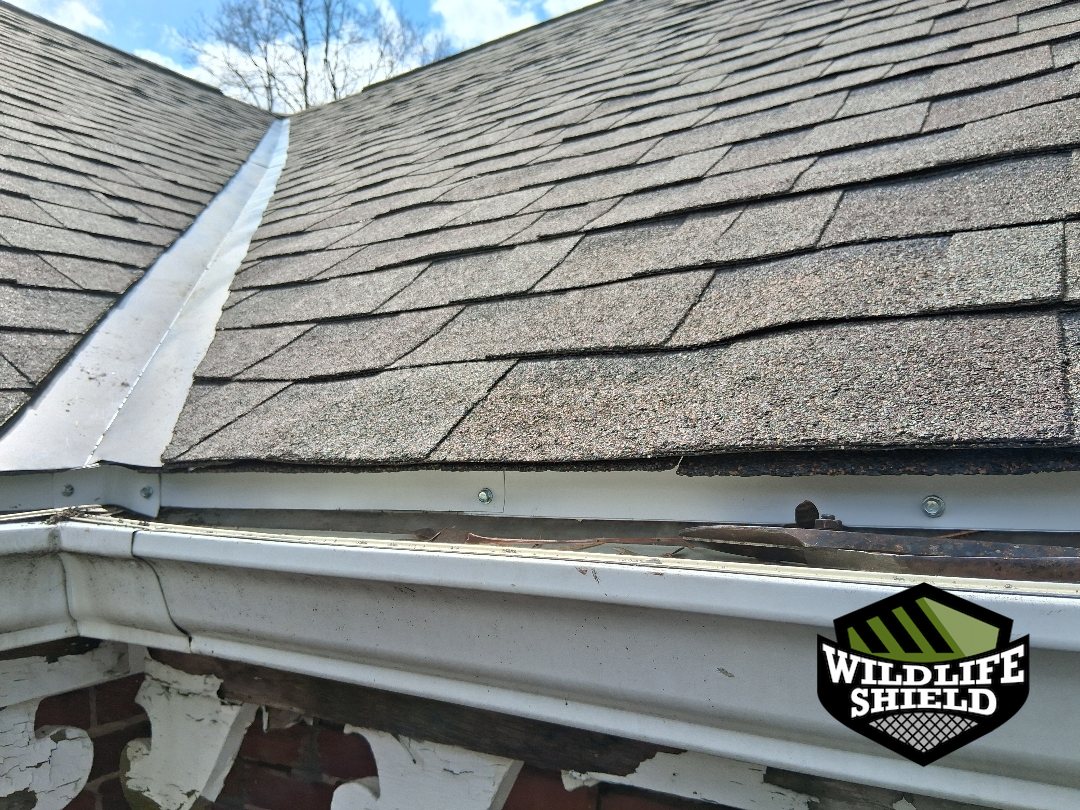
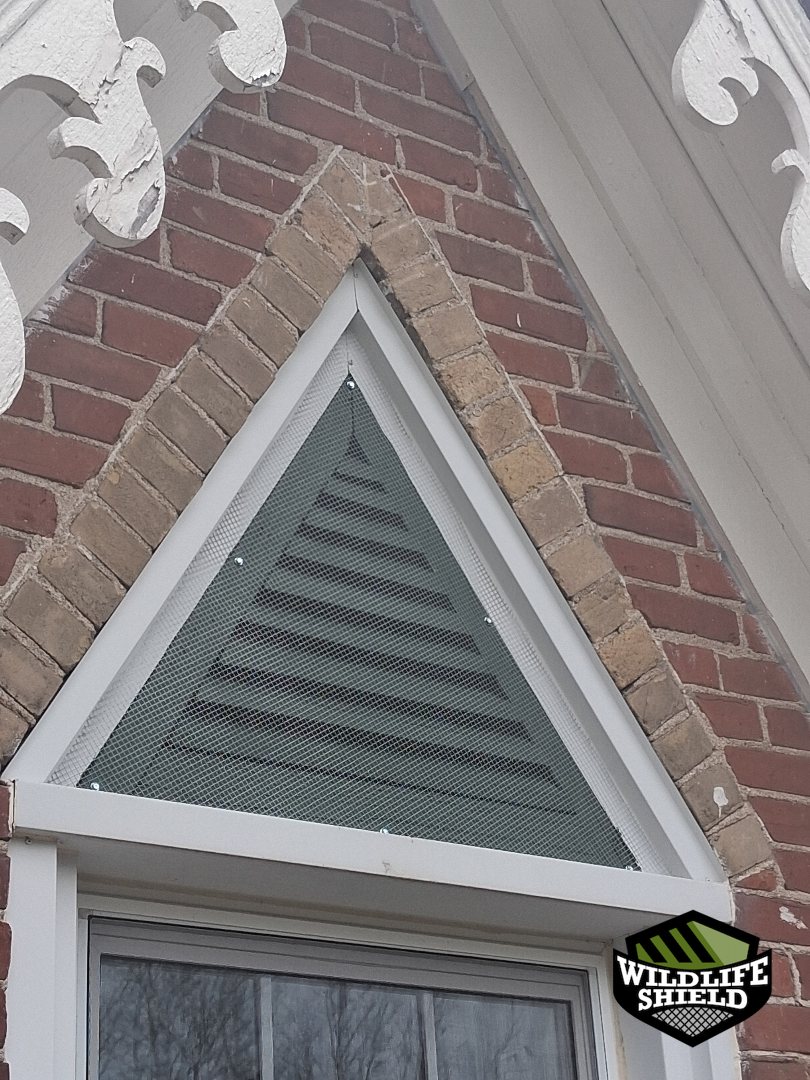
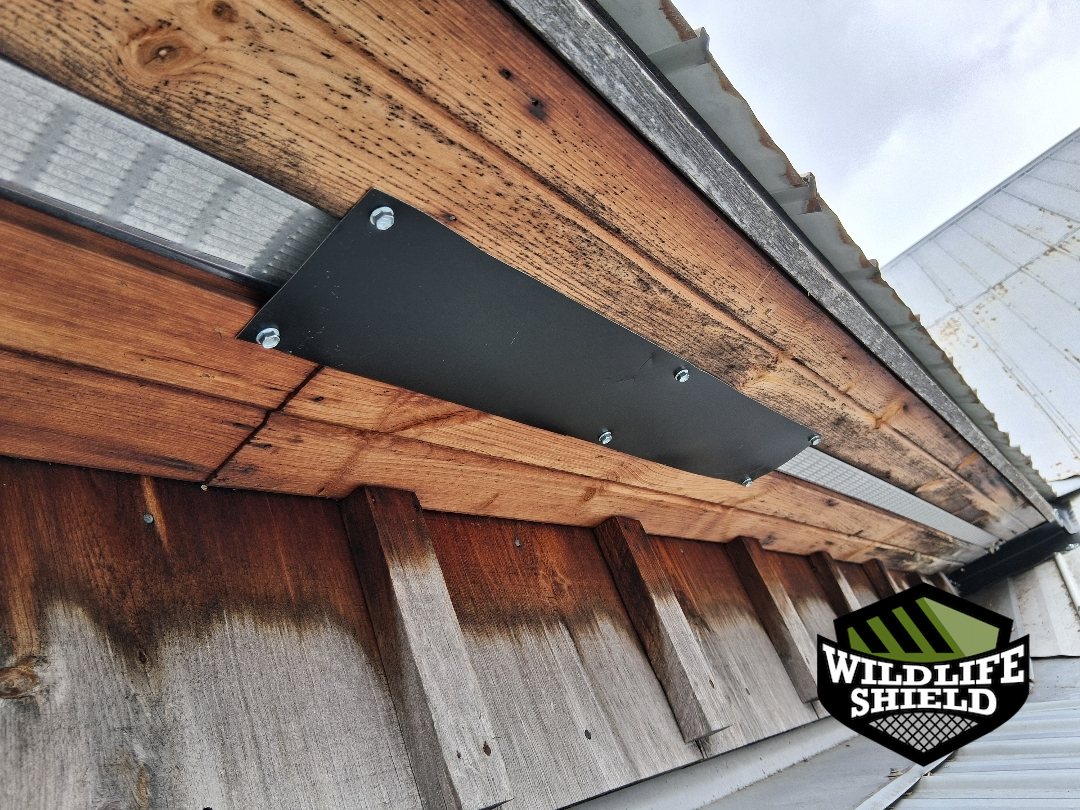
The photographs show an active opening beneath the roof edge, one-way doors installed over entry points, gaps in brick mortar joints and trim, and completed flashing installed along the drip edge. Additional images show the roofline after exclusion work was completed. One inspection photo also shows a bat visible within an exterior wall gap.
Cause Analysis
Squirrels commonly exploit deteriorated roof edges, fascia, and drip edge openings to enter attic spaces. Older homes may also develop small gaps in brickwork and trim that can provide access for other wildlife. Securing all accessible openings helps prevent animals from relocating to nearby entry points after removal.
Treatment / Removal
During the first visit, Andrew confirmed squirrel activity and installed two one-way doors at active entry locations on the first- and second-floor roof areas. These devices allowed the squirrels to exit naturally while preventing re-entry.
The inspection also identified bat access through separate structural gaps. Those openings were incorporated into the exclusion plan to reduce future wildlife access while allowing the existing activity to conclude appropriately.
Exclusion & Repairs
Following the inspection, the following exclusion work was completed:
- Installation of two one-way doors at active roof entry points
- Sealing approximately 53 feet of drip edge using flashing
- Sealing approximately 1 foot of fascia with galvanized steel mesh
- Excluding approximately 8 feet of brick wall gaps using exterior-grade caulking
The completed repairs reinforced vulnerable sections of the roofline while preserving normal building ventilation.
Outcome & Confirmation
During the second visit, the homeowner reported no further sounds or signs of squirrel activity. The one-way doors were removed, the primary entry points were permanently sealed, and the completed exclusion work was inspected.
The final inspection confirmed that the repairs remained secure and no further wildlife activity was reported.
Technician Notes
Andrew identified several wildlife access points during the initial inspection, including active squirrel entry beneath the roof edge and additional structural gaps requiring exclusion. Installing one-way doors before completing permanent repairs allowed the squirrels to leave the attic humanely while comprehensive exclusion reduced the likelihood of future wildlife entry through adjacent openings.